

News
-
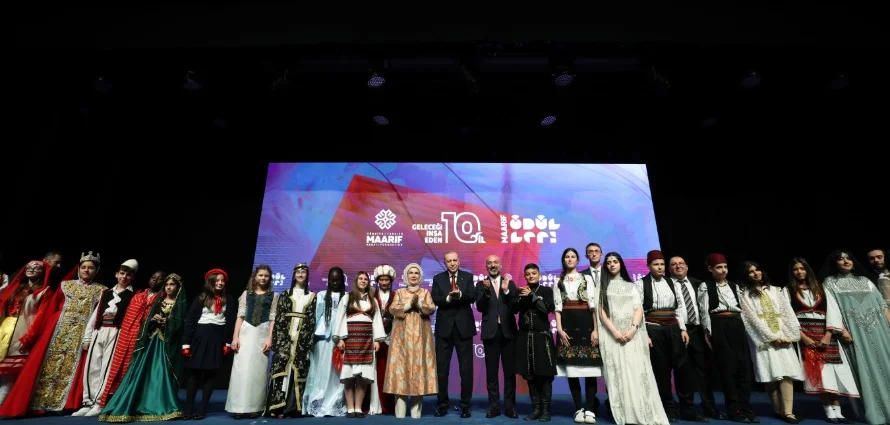 October 15, 2026 10th Anniversary of Turkish Maarif Foundation Celebrated at the Presidential Complex
A special program titled “10 Years Building the Future” was held at the Presidential Complex to mark the 10th anniversary of Turkish Maarif Foundation. Attended by President Recep Tayyip Erdoğan, the event highlighted the Foundation’s decade-long journey in international education, its activities across different regions of the world, and its goals for the future.The program was attended by President Recep Tayyip Erdoğan and his wife, Emine Erdoğan; Minister of National Education Prof. Dr. Yusuf Tekin; Minister of Family and Social Services Mahinur Özdemir Göktaş; former Minister of National Education İsmet Yılmaz; President of Turkish Maarif Foundation Mahmut M. Özdil; ambassadors; members of the Board of Trustees and Board of Directors of Turkish Maarif Foundation; and heads and representatives of various institutions and organizations.The program featured a performance by a choir composed of students from different countries where Turkish Maarif Foundation conducts educational activities. The opening address was delivered by Mahmut M. Özdil, President of Turkish Maarif Foundation.Mahmut M. Özdil: “Today, That Voice Echoes in Sixty-Six Countries, in Countless Languages”In his address, Mahmut M. Özdil, President of Turkish Maarif Foundation, reflected on the vision that guided the Foundation’s establishment and the responsibility it has undertaken in education. “Ten years ago, we embarked on this journey because we believed that a new voice needed to rise in the field of education around the world. That voice needed to be heard because, above all, we have responsibilities toward the new generations who will build the future,” he stated.Emphasizing that they regard education as a field of international solidarity, Özdil underlined their commitment to an approach that respects the knowledge and experiences of different societies. He stated that their guiding principle is to develop sincere, long-term partnerships based on mutual trust with the countries in which they operate, placing children's futures at the center of these relationships.Özdil drew attention to the fact that hundreds of millions of children worldwide are still deprived of educational opportunities due to irresponsibility, indifference, poverty, political instability, migration, war, colonialism, and genocide. He stressed that this situation makes it essential to develop a new approach to education and assume a shared responsibility toward future generations.Referring to the international reach achieved by Turkish Maarif Foundation over the past decade, Özdil said, “Ten years ago, we set out to raise a new voice in the world. Today, that voice echoes in sixty-six countries, in countless languages, in minds and hearts.”In his speech, Özdil also criticized one-sided approaches to education and perspectives that disregard societies’ own cultural heritage and intellectual traditions. He stated:“We must question a system that tells children their own language cannot be a language of science, that their own history and intellectual traditions have nothing to contribute to humanity, that their culture can only be a subject of research conducted by others, and, in short, that everything belonging to them is outdated and must be left behind. We must question a system that says, ‘Now be silent, sit down, and let the light of my knowledge enlighten you,’ assigning some the perpetual role of masters and others the role of apprentices who never cease to be apprentices.”President Erdoğan: “The Success of Turkish Maarif Foundation Is a Source of Pride for Us All”President Recep Tayyip Erdoğan began his address by thanking the employees who have contributed to the activities of Turkish Maarif Foundation over the past ten years. Congratulating all members of the Foundation who have carried Türkiye’s educational vision to different parts of the world since its establishment, President Erdoğan expressed his hope that the Foundation’s 10th anniversary would bring blessings to the Turkish nation, the communities with which Türkiye shares close historical and cultural ties, and all humanity.Noting that Turkish Maarif Foundation embarked on its journey ten years ago with ambitious goals, President Erdoğan emphasized that the Foundation now operates in 66 countries across six continents. He highlighted that more than 75,000 students receive quality education at 611 institutions worldwide, describing the achievements of the past decade as an important source of pride for Türkiye.Referring to the opportunities provided by Turkish Maarif Foundation to children and young people across different regions, President Erdoğan stated:“Our Maarif Foundation offers new opportunities to children and young people living in different parts of the world, from Asia to Africa and from the Balkans to the Caucasus. We equip them with knowledge and prepare them for life in every respect. At the same time, we enable these children to establish strong and sincere bonds with different cultures. Through our schools, dormitories, universities, research centers, and educational institutions, we bring Türkiye’s educational experience to different continents.We wholeheartedly believe that, in the very near future, the young people studying at Maarif institutions will successfully serve their own countries in every field and help shape the future of their homelands. In this respect, I would particularly like to emphasize that I find it highly appropriate for the 10th anniversary program to be organized under the title ‘10 Years Building the Future.’”“Our Country Is Now a Global Player”Addressing the country representatives of Turkish Maarif Foundation serving in 66 countries, President Erdoğan highlighted Türkiye’s growing capacity in international education and the increasing interest in Turkish universities. He made the following remarks regarding Türkiye’s international position in education:“Interest in Turkish universities has grown exponentially every year. While the number of international students in our country was around 48,000 ten years ago, this year it has approached 380,000.It has now become commonplace to encounter doctors, politicians, businesspeople, bureaucrats, teachers, artists, and academics who graduated from Türkiye in the countries where you serve. In many countries around the world, we meet numerous people who speak Turkish, know and understand Türkiye, and follow Turkish culture with great interest.What is even more gratifying is that this vision is being carried to different corners of the world through Turkish Maarif Foundation.Today, on the one hand, we provide quality education to more than 24 million students, from preschool to higher education. On the other hand, through institutions such as our Maarif Foundation, we make the strong capacity we have built in international education available to our friends and brotherly nations.This is an achievement that could not even have been imagined 25 years ago. Those who target our Maarif Foundation may not understand what this means, but you and I know very well what this vision represents.Although those who view the world and Türkiye through the eyes of others may still have failed to recognize it, our country is now a global player.”President Erdoğan stated that Türkiye has reached a new level not only in the defense industry, diplomacy, tourism, and foreign trade, but also in international education. He emphasized that the efforts of Turkish Maarif Foundation personnel play an important role in advancing these achievements further.Noting that the activities carried out through Turkish Maarif Foundation and Yunus Emre Institute are not based on a one-sided approach, Erdoğan stressed that respecting each country’s history, language, culture, and educational traditions is one of their fundamental principles.Emphasizing that colonialism has no place in Türkiye’s history, President Erdoğan stated that relations established with different societies are based on mutual respect and the preservation of cultural values. He pointed out that, throughout history, communities living in different regions were able to preserve their identities, whereas many societies under the domination of Western colonial powers experienced immense suffering and saw their cultural heritage destroyed.Referring to the cultural losses suffered during these periods, President Erdoğan said, “Hundreds of local languages disappeared, cultural elements were destroyed, and collective memory was erased.”He emphasized that differences in people's skin colors and languages are manifestations of the power of Allah's creation. President Erdoğan stated that no individual should face discrimination on the basis of language, culture, skin color, ethnic origin, or belief, adding that Türkiye’s international approach is founded on this understanding.President Erdoğan Thanks Maarif EmployeesPresident Erdoğan also reflected on the establishment of Turkish Maarif Foundation, recalling that ten years ago Türkiye set out to place its educational activities abroad within a strong, reliable, and institutional framework.Stating that the Foundation assumed significant responsibilities during this process, Erdoğan noted that addressing the problems caused by FETÖ’s educational network abroad was among its primary tasks.President Erdoğan stated that, following the July 15 coup attempt, joint efforts by the relevant institutions resulted in the complete or partial closure of FETÖ-linked schools in more than 50 countries.Highlighting the significant role played by Turkish Maarif Foundation in taking over these educational institutions, Erdoğan stressed that the utmost care was taken to ensure that students were not adversely affected and that their education continued without interruption.President Erdoğan emphasized that the Foundation’s achievements owe much to the dedicated efforts of its employees serving in different countries. He stated that members of Turkish Maarif Foundation have established strong bonds of affection and friendship with the communities in the regions where they serve.Drawing attention to the sacrifices of Maarif employees who have turned distant lands into places that feel like home and carried the spirit of their homeland wherever they go, Erdoğan congratulated every member of the Maarif family working with great dedication in different corners of the world.Maarif Awards 2026 Presented to Their RecipientsThe program, which highlighted the ten-year educational journey of Turkish Maarif Foundation, continued with the presentation of the Maarif Awards 2026. President Recep Tayyip Erdoğan and his wife, Emine Erdoğan, presented the awards to the students selected as recipients of the Maarif Awards 2026.The program concluded with a commemorative group photograph following the award ceremony....
-
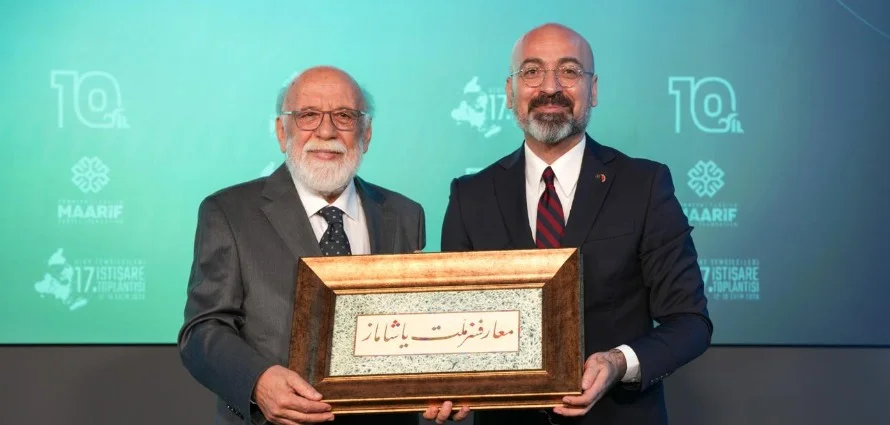 October 12, 2026 17th Country Representatives' Consultation Meeting Begins in Istanbul
The 17th Country Representatives' Consultation Meeting of Turkish Maarif Foundation began on October 12, 2026, at the Foundation's headquarters in Istanbul. The meeting, which will take place from October 12 to 16, aims to evaluate educational activities carried out in different countries, share experiences from the field, and strengthen coordination between headquarters and country representative offices. The meeting will also address improving the quality of education, developing institutional processes, and discussing the Foundation's strategic goals for the coming period.The opening ceremony was attended by former Minister of National Education Prof. Dr. Nabi Avcı, President of Turkish Maarif Foundation Mahmut M. Özdil, members of the Foundation's Board of Trustees and Board of Directors, and country representatives from 66 countries.Özdil: “We Must Learn from One Another”Delivering the opening address, President of Turkish Maarif Foundation Mahmut M. Özdil emphasized the particular significance of the meeting, held in the year marking the Foundation's 10th anniversary. Recalling that they had set out ten years ago with the aim of bringing a new voice to international education, Özdil highlighted the importance of the relationships that Turkish Maarif Foundation, now operating in 66 countries, has established with different cultures and societies.Emphasizing that the Country Representatives' Consultation Meetings play an important role in ensuring that experiences from the field are reflected in institutional decision-making processes, Özdil said:“Your voices and contributions must be present in everything that happens at headquarters, and headquarters must be aware of everything happening in the field. This is precisely why we have been holding these consultation meetings with such consistency.”Referring to the role of consultation meetings in strengthening institutional communication and fostering a culture of collective thinking, Özdil continued:“This is our 10th anniversary, yet we are holding our 17th consultation meeting. We communicate daily and remain in constant contact. We visit you in the field and see your work firsthand. You also come to headquarters whenever necessary, not only for the Country Representatives' Meetings but on other occasions as well. So, in fact, there is a continuous exchange. Nevertheless, I believe that coming together with all our country representatives, discussing issues collectively, and sharing our ideas with one another is one of the most important elements that keep the Foundation vibrant.”Addressing inequalities in access to education around the world and the hierarchies of knowledge reproduced through education, Özdil stated that the approach of Turkish Maarif Foundation extends beyond simply opening new schools. Emphasizing the importance of an educational philosophy grounded in the cultural and academic heritage of different societies and based on mutual learning, Özdil said:“I believe that our work will truly have meaning if we focus on genuine cooperation: understanding what exists within the traditions of the places where we operate, discovering what we can learn from them, and finding ways to better hear the voices emerging from those communities.”Noting that the Foundation has reached 611 schools and more than 80,000 students across 66 countries, Özdil stressed the need to focus not only on numerical growth but also on the quality of educational activities and the impact they have on societies. Highlighting that the success of educational initiatives cannot be assessed solely through quantitative indicators, Özdil stated:“Reaching 66 countries, 611 schools, and more than 80,000 students in our 10th year... These figures are truly impressive. But our work is not merely about measuring, weighing, and putting everything into predefined categories. We must think together, discuss together, and find solutions together regarding the quality of our work, the depth of the relationships we establish with the people whose lives we touch, how our activities genuinely respond to needs in the places where we operate, and what those communities actually need. In other words, we must learn from one another. And when I say this, I do not mean only those of us gathered here. We must also learn from one another in the countries where we operate and ensure that these channels of communication remain open at all times.”Outlining the Foundation's future activities around three main priorities—quality and depth in education, collaborative knowledge production, and institutional sustainability—Özdil highlighted the importance of the International Maarif Program, the MARKA accreditation system, academic partnerships, and digital transformation initiatives.Özdil stated that the 2027–2029 Strategic Plan would be developed with contributions from country representatives, emphasizing that a strategic plan embraced by those implementing it in the field would be decisive in achieving institutional objectives. He concluded his address by reaffirming the goal of Turkish Maarif Foundation to become an institution that contributes to international educational thought, places mutual learning at the center of its approach, and serves as a reference point in the field of education.Nabi Avcı: “What Does the Difference Between Cultures Mean?”Former Minister of National Education Prof. Dr. Nabi Avcı, in his address, drew on examples from Türkiye's educational history to highlight the social and cultural impact of educational institutions, the role of teachers in shaping students' ways of thinking, and the importance of education in understanding different cultures.Recalling that the Village Institutes, Imam Hatip Schools, and Maarif Colleges were established as major educational initiatives in Türkiye's history, Avcı discussed the original purposes of these institutions and the transformations they had undergone over time.Sharing memories from his own school years, Avcı described how an art teacher at a Maarif College taught students not only the skills associated with a particular subject but also how to view the world from different perspectives. Reflecting on the influence of his teacher, Avcı said:“He taught those of our classmates who had artistic talent how to paint, and students like me, who lacked that talent, how to look at paintings.”Avcı explained that his art teacher encouraged students to reflect on different cultures and schools of thought. He illustrated the perspective his teacher had helped them develop through a series of questions:“What is happening in the world? What does the difference between cultures mean? What kinds of relationships existed between East and West, between Türkiye and the West, and between Türkiye and its neighboring regions? What are these relationships like today, and what should they be like?”Avcı emphasized that, in this respect, his teacher had been an educator who broadened both his own horizons and those of his classmates.Reflecting on the international educational activities of Turkish Maarif Foundation, Avcı also highlighted the importance of questioning hierarchies of knowledge. He stressed the need to challenge established assumptions about which forms of knowledge are considered valuable and worthy of learning, emphasizing the importance of recognizing the knowledge and perspectives of different societies.In this context, Avcı shared examples of conventional ways of depicting world maps and drew attention to the possibility of questioning established perspectives, saying, “Look, the map can also be viewed this way.”Connecting the work of Turkish Maarif Foundation with the idea of “Let's try drawing the world map ourselves and see what it looks like,” Avcı concluded his speech by thanking the country representatives for their efforts.Educational Activities and Strategic Goals to Be Evaluated Over Five DaysDuring the 17th Country Representatives' Consultation Meeting, which will continue until October 16, the educational activities of Turkish Maarif Foundation across different regions, institutional development processes, and priorities for the coming period will be evaluated.The meeting will provide an opportunity for country representatives to share their experiences from the field, discuss potential solutions to common challenges, and explore opportunities for strengthening cooperation among countries....
-
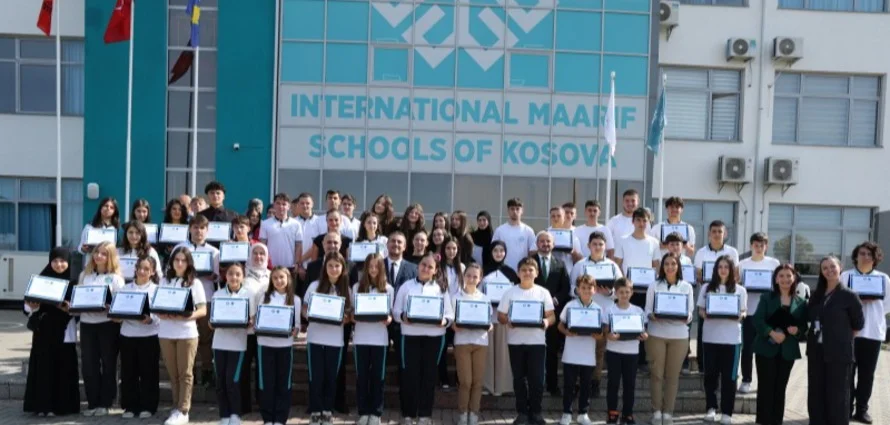 October 08, 2026 Kosovo Maarif Schools: Pioneers of Artificial Intelligence Education
International Maarif Schools in Kosovo honored students who demonstrated outstanding achievements in various fields throughout the 2025–2026 academic year at a special awards ceremony. Approximately 60 students who achieved success in national and international competitions and events across a wide range of disciplines, from science and arts to robotics and sports, received their awards during the Achievement Awards Ceremony.The ceremony, which celebrated the students’ accomplishments and achievements throughout the year, was attended by Şeyda Çimeli Aydın, Counsellor at the Embassy of the Republic of Türkiye in Pristina; Mehmet Nedim Aslan, Kosovo Country Representative of Turkish Maarif Foundation; Dr. Kadir Dinç, Religious Affairs Counsellor at the Embassy of the Republic of Türkiye in Pristina; İlker Yurduseven, Interior Affairs Counsellor at the Embassy of the Republic of Türkiye in Pristina; Mehmed Taha Doğan, TİKA Kosovo Coordinator; Áron Kerékgyártó, Commercial Counsellor at the Embassy of Hungary; Suat Bakkal, General Manager of BKT; Necmeddin Esat Belen, Turkish Airlines Representative in Kosovo; and Meriton Sunduri, Executive Director of the Kosovo Turkish Chamber of Commerce (KTTO). Representatives of public institutions and civil society organizations, members of the press, school administrators, teachers, and parents also attended the event.Speaking at the ceremony, Mehmet Nedim Aslan, Kosovo Country Representative of Turkish Maarif Foundation, stated that the students’ achievements were made possible not only through their disciplined efforts but also through the dedication of their teachers and the support of their families. He emphasized that the students had successfully represented both their schools and Kosovo through their accomplishments not only in academics but also in science, technology, arts, culture, and sports.Highlighting the significant achievements of Turkish Maarif Foundation as it marks its 10th anniversary, Aslan underlined that its educational approach is rooted in the principle of nurturing knowledgeable, good, and virtuous individuals. Recalling that educational activities in Kosovo began in 2017 and are currently continuing in Pristina and Prizren, he stressed that equal importance is placed on developing students’ sense of social responsibility, cultural awareness, and international communication skills alongside their academic competencies.Devoting a significant part of his speech to digital transformation in education, Aslan announced that the AI Literacy Program, initially launched as a pilot initiative with the support of Turkish Maarif Foundation, had been officially integrated into the curriculum during the current academic year. He noted that International Maarif Schools in Kosovo had become the first school in the country to introduce and teach AI literacy as a dedicated subject.Aligned with the digitalization objectives outlined in Kosovo’s Education Strategy 2022–2026, the program aims to equip students not only to use technology but also to understand how it works, critically assess the information it provides, evaluate its potential impacts, and develop solutions through the responsible use of technology....
-
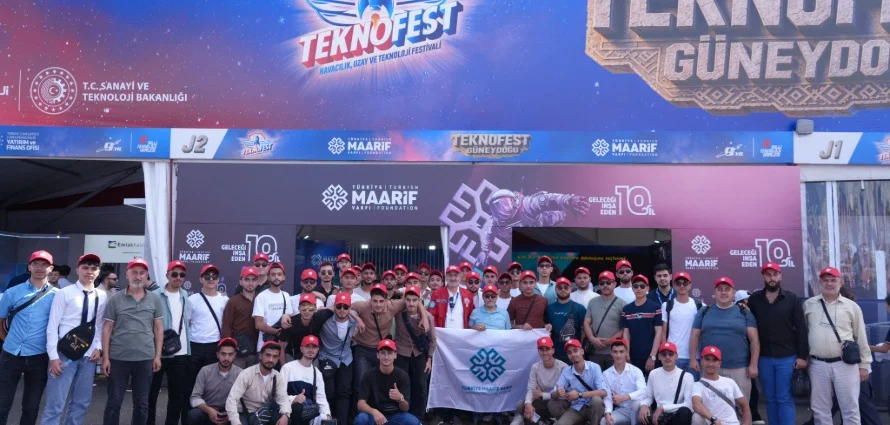 October 05, 2026 Seven Maarif Teams from Four Countries Participate in TEKNOFEST 2026
Turkish Maarif Foundation (TMF) participated in TEKNOFEST 2026 with students attending its schools in different countries. Students from Maarif schools in Afghanistan, Georgia, Kyrgyzstan, and Pakistan took part in technology competitions held in Diyarbakır and Şanlıurfa, presenting their innovative projects.A total of 7 teams, 16 students, and 6 teacher advisors from Turkish Maarif Foundation schools participated in competitions organized as part of TEKNOFEST 2026. Students at primary, middle, and high school levels had the opportunity to showcase projects they developed in various fields, including educational technologies, healthcare, agricultural technologies, and addiction prevention.Turkish Maarif Foundation participated with five teams in the competitions held in Diyarbakır from September 16 to 20 and was represented by two finalist teams in the competitions held in Şanlıurfa from September 30 to October 4.Seven Innovative Projects from Four CountriesStudents from Maarif Schools in Afghanistan participated in the competitions with projects focusing on educational technologies and addiction prevention. The "FluentFuture" project, developed by students from Sheberghan Boys' High School, competed in the Educational and Digital Experience Technologies category, while the "VapeGuard" project, developed by students from Mazar-i-Sharif Boys' High School, was selected as a finalist in the Technological Applications for Combating Addiction category. Using artificial intelligence and Internet of Things technologies, VapeGuard aims to detect electronic cigarette use in school environments and provide early warnings.The "AlgaeMist" project, developed by students from the Kyrgyzstan Maarif Educational Complex, competed in the agricultural technologies category with an algae-based natural protective spray designed to reduce post-harvest food losses in fruits and vegetables. The project aims to create an edible protective barrier on the surface of fruits and vegetables, offering an innovative approach to reducing food waste and extending the shelf life of produce.Three teams from Maarif Schools in Pakistan participated in the competitions with projects developed in healthcare technologies, educational technologies, and healthy living. A team of primary school students from Maarif Schools in Georgia also took part in the event with a project focusing on healthy living.Students Participate in Science and Technology ActivitiesIn addition to the competitions, Maarif students participated in technology workshops and science activities organized as part of TEKNOFEST, gaining firsthand experience with various technological applications. They also visited exhibition areas, met participants from different countries, and exchanged ideas about projects and emerging technologies.The Turkish Maarif Foundation stand at TEKNOFEST also attracted considerable interest from visitors. Hajera Nazari, a graduate of Maarif Schools in Afghanistan who is currently studying at Harran University Faculty of Medicine, welcomed visitors to the stand and contributed to introducing the educational activities of Turkish Maarif Foundation. Students from Science and Technology High Schools in Syria also visited the stand and learned about the Foundation's ongoing activities.Chairman Özdil Meets with Finalist StudentsTurkish Maarif Foundation Chairman Mahmut M. Özdil met with Maarif students who reached the TEKNOFEST finals, accompanied by Board of Trustees members Prof. Dr. Nevzat Şimşek and Ömer Faruk Terzi.During the meeting, students introduced their projects and shared their preparation processes and TEKNOFEST experiences. The EcoSpark team from Kyrgyzstan and the Al-Khwarizmi 1.0 team from Afghanistan discussed the development stages of their projects and their future goals.Chairman Özdil and the accompanying delegation received information about the students' work and expressed their support for their initiatives in science and technology.Özdil: "We Must Develop Solutions to Global Challenges Through International Cooperation"Turkish Maarif Foundation Chairman Mahmut M. Özdil participated in the "KÜRE Talks" program organized by the Culture and Civilization Foundation (KÜME) as part of TEKNOFEST, where he shared his views on the future of education, international cooperation, and technological developments.Emphasizing that challenges in education concern not only individual countries but the entire world, Özdil highlighted the importance of international solidarity and cooperation in developing lasting solutions.Özdil stated that Turkish Maarif Foundation carries out its educational activities in the 66 countries where it operates with an approach based on mutual learning. He emphasized that the Foundation's approach goes beyond simply sharing Türkiye's educational expertise with other countries, drawing attention to the importance of learning from the knowledge, experiences, and perspectives of different societies in advancing and transforming education.Stressing that education carries responsibilities beyond the transmission of knowledge, Özdil stated that young people should benefit from the accumulated wisdom of the past while developing the skills of independent thinking, critical inquiry, and creativity needed to shape the future.He also emphasized that scientific and technological advancements cannot be considered independently of ethical values, stating that education should teach young people not only "what they can do" but also "what they should do."Concluding his remarks with Turkish Maarif Foundation's motto, "Good People Will Save the World," Özdil reaffirmed the Foundation's commitment to supporting young people's work in science and technology.Innovative Contributions to Science and Technology from Maarif StudentsThe participation of seven teams from four countries in TEKNOFEST 2026 reflected the opportunities Turkish Maarif Foundation provides to students across different regions of the world in science and technology. Projects developed in fields such as education, healthcare, agriculture, and addiction prevention enabled students to apply their knowledge and skills to address real-life challenges.Throughout the competitions, Maarif students from diverse cultural backgrounds had the opportunity to present their projects in an international environment and exchange knowledge and experiences with their peers.Turkish Maarif Foundation continues to support the scientific and technological work of its students around the world, helping them develop innovative ideas and transform those ideas into tangible projects....
-
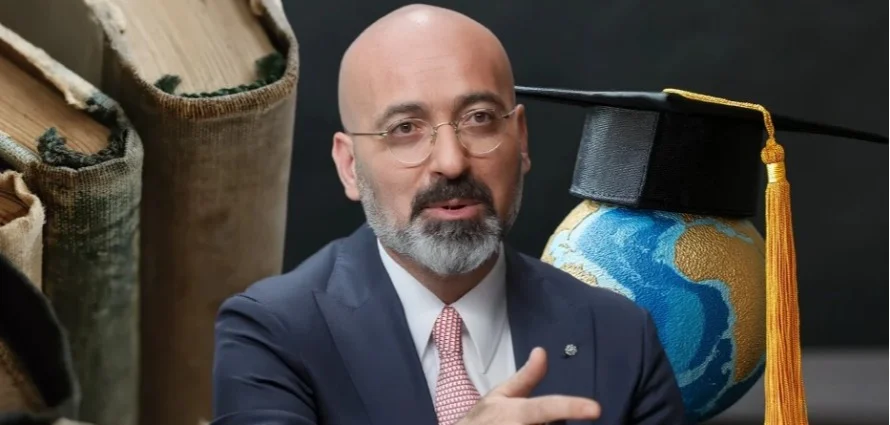 October 02, 2026 President Özdil Discusses Global Challenges in Education
Mahmut M. Özdil, President of Turkish Maarif Foundation, discussed inequalities in access to education worldwide, the struggle of children to continue their education in conflict zones, and the role of education in shaping the future of societies in an interview with GZT. Emphasizing that education cannot be limited to the transmission of academic knowledge, Özdil stressed that schools should provide children with an environment where they can discover themselves and develop their talents.Pointing out that more than 500 million children worldwide have no school to attend, Özdil stated that how children are educated and how they are treated are just as important as access to education itself.Describing the determination of children in Gaza to continue playing, laughing, and pursuing their education despite war and destruction as a form of resistance, Özdil drew attention to their efforts to preserve their joy for life, saying, "Children there are laughing. Children there continue to play." He also highlighted the connection between education and hope for the future with the following words:"What does education mean? It means preparing for tomorrow. It means you have not been able to take my tomorrow away from me. It is deeply meaningful to say, 'Despite everything, I am still working toward that tomorrow.'"Referring also to examples from the war in Syria, Özdil noted that children continued striving to pursue their education even under extremely difficult circumstances. He spoke about approximately 70 children from Pakistan's Waziristan region, most of them girls, who had received an education. He explained that their return to their homeland without losing touch with their cultural roots had helped transform local attitudes toward education. Highlighting the significance of girls' education in bringing about social change, he stated: "Attitudes toward girls attending school are also changing. This could potentially change the destiny of the entire region."President Özdil also emphasized that educational opportunities considered ordinary in Türkiye can have a profound impact on children's lives in different parts of the world, stating: "Sometimes, things that seem very simple to us can truly become matters of vital importance."...
-
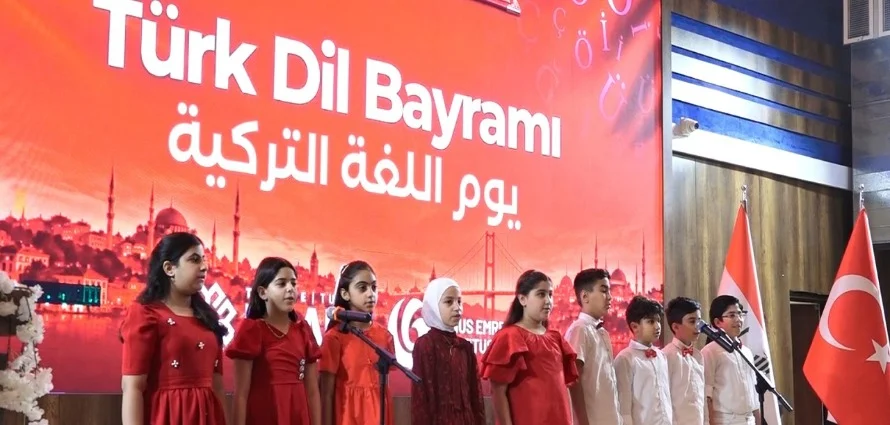 September 26, 2026 Turkish Language Day Celebrated in Baghdad
Turkish Language Day, observed on 26 September, was celebrated in Baghdad with a special event organised jointly by Turkish Maarif Foundation and Yunus Emre Institute. Bringing together students from different cultural backgrounds through Turkish, the event highlighted the role of language in strengthening the historical and cultural ties between Türkiye and Iraq.Turkish Maarif Foundation and Yunus Emre Institute organised a special event in the Iraqi capital, Baghdad, to mark the 94th anniversary of Turkish Language Day on 26 September.Held at Maarif Schools in Baghdad, the programme was attended by Turkish Maarif Foundation Representative in Iraq Ali Arıkmert, Baghdad Yunus Emre Institute Coordinator İbrahim Özbilgin, representatives of the Embassy of Türkiye in Baghdad, academics, students and invited guests.The programme began with a recitation from the Holy Qur’an and the Turkish National Anthem. Following the opening speeches, students took the stage with Turkish poetry recitals and performances.Speaking at the event, Turkish Maarif Foundation Representative in Iraq Ali Arıkmert emphasised that Turkish-language education goes beyond language teaching and drew attention to the shared historical, cultural and civilisational heritage of Türkiye and Iraq.“Teaching Turkish is not merely about teaching a language; it also serves as a strong bridge between the two countries in terms of their historical, cultural, geographical and civilisational ties,” Arıkmert said.Highlighting the significance of bringing together institutions working in the field of Turkish language education in Baghdad on the occasion of Turkish Language Day, Arıkmert stressed that Turkish holds a special place for Türkiye and Iraq, two countries with a shared civilisational heritage.Baghdad Yunus Emre Institute Coordinator İbrahim Özbilgin said that one of the main objectives of their Turkish-language education activities in Iraq is to increase interest in Turkish and share experience and expertise in the field.Referring to the students’ performances during the programme, Özbilgin said they were particularly pleased to see students from different cultural backgrounds contributing to the event through Turkish poems and stage performances.Students from Different Cultures Come Together Through TurkishStudents from different countries also shared their thoughts and feelings about the Turkish language during the event.Muhammed, a Sudanese student, described what Turkish means to him, saying: “For us, Turkish means a feeling, a way of life, a culture and a new world.”The programme, which brought together people with an interest in the Turkish language, concluded with Turkish poetry recitals and commemorative photographs....
-
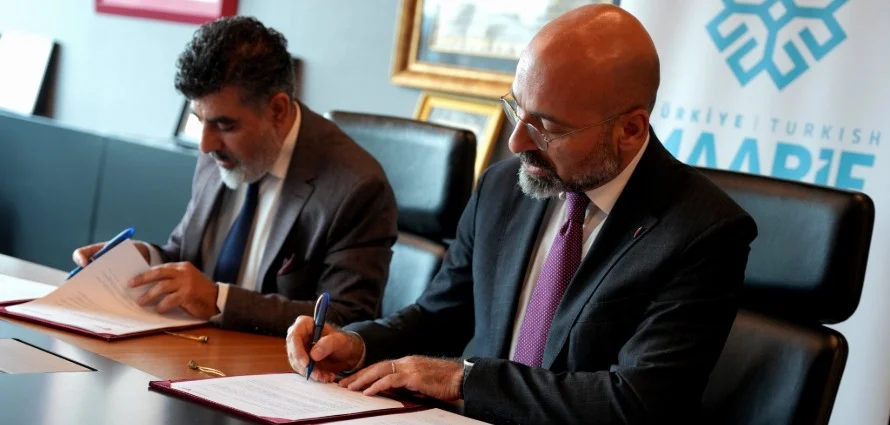 September 04, 2026 Center for Türkiye Studies Established in Skopje through Cooperation between Turkish Maarif Foundation and IBU
A Center for Türkiye Studies has been established in Skopje, the capital of North Macedonia, through cooperation between Turkish Maarif Foundation and International Balkan University (IBU). Operating under IBU, the center will serve as a research platform where academic studies on Türkiye will be conducted through an interdisciplinary approach.The center’s areas of activity have been structured within a broad academic framework addressing Türkiye from multiple perspectives. Research is planned on Türkiye’s domestic and foreign policy, public policies and regional relations, as well as on economy, trade, investment, development and regional integration. Turkish language and culture, cultural diplomacy, education policies, teacher education and comparative education will also be among the center’s priority areas of study. Research on Türkiye is intended to be approached from a multidimensional perspective, drawing on contributions from disciplines such as history, sociology, media and communication, and law.The center will also develop cooperation with the existing academic programs in the fields of Turkish language and education at International Balkan University. The undergraduate programs in Turkish Language Teaching and Turkish Primary Education, together with the master’s programs in Turkish Language and Literature and Turkish Language Education, are planned to be integrated with the center’s research, project and publication activities. The PhD program in Turkish Language and Literature is also expected to contribute to the center’s academic work.In order to provide Türkiye studies with a more systematic academic foundation at the postgraduate level, International Balkan University also plans to launch a Master’s Program in Türkiye Studies in the coming period. The program is intended to operate in close academic interaction with the center’s research activities.Academic publishing will also be one of the center’s main areas of activity. Plans include establishing book series on Türkiye studies under Balkan University Press and, in the medium to long term, launching a peer-reviewed academic journal dedicated to the field.The Türkiye Studies Centers established by Turkish Maarif Foundation in different countries not only support the production of academic knowledge on Türkiye but also provide a platform for developing joint research among scholars. Within this framework, the centers aim to develop research projects and thematic working groups, strengthen international research networks, produce data and reports, and prepare policy briefs on current issues concerning Türkiye and related regions....