

Symposium on Teaching Turkish and Turkology in the Balkans Concludes
November 07, 2026
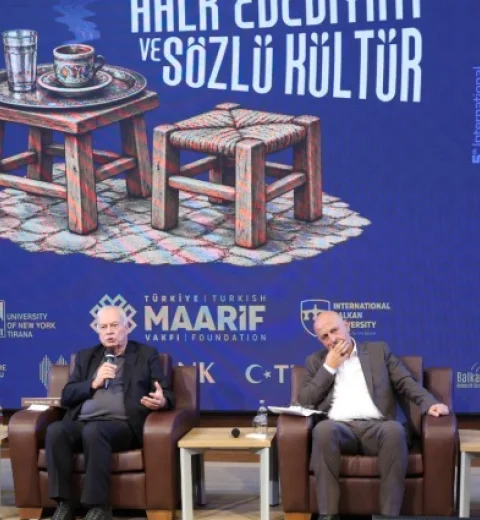
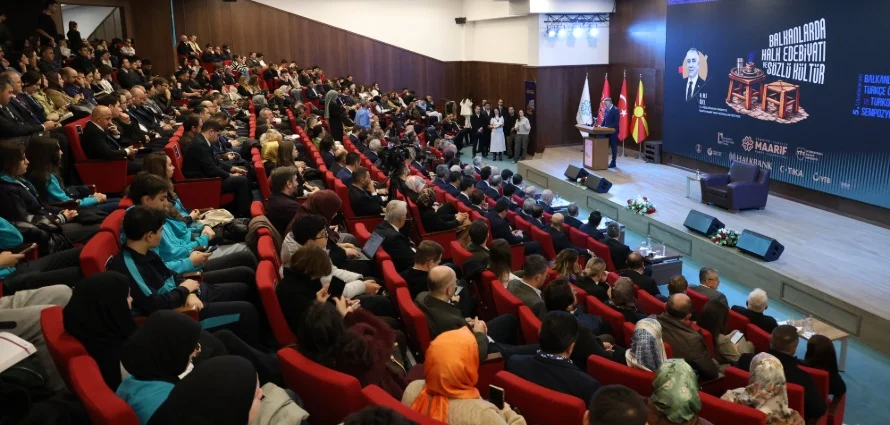
The 5th International Symposium on Teaching Turkish and Turkology in the Balkans, organized in cooperation with Turkish Maarif Foundation and the Balkan Studies Center at the University of New York Tirana (UNYT), was held in Skopje, the capital of North Macedonia, from November 5 to 7, 2026. Hosted by International Balkan University under the theme “Folk Literature and Oral Culture in the Balkans,” the symposium brought together academics, researchers, and educators from various countries.
Organized to support academic studies in Turkish language teaching and Turkology in the Balkans, explore the region’s linguistic and cultural heritage, and strengthen cooperation among scholars, the symposium featured panels and academic sessions over two days. Discussions focused on oral culture, folk literature, linguistics, Turkish language teaching, cultural memory, and literary interactions.
Opening Ceremony Highlights the Cultural Heritage of Turkish in the Balkans
The opening ceremony, held at International Balkan University, was attended by Deputy Minister of Foreign Affairs and Member of Turkish Maarif Foundation's Board of Trustees Hacı Ali Özel; Deputy Minister of National Education and Member of Turkish Maarif Foundation's Board of Trustees Prof. Dr. Cihat Demirli; President of Turkish Maarif Foundation Mahmut M. Özdil; Türkiye's Ambassador to Skopje Alper Aktaş; North Macedonia's Minister of State Zülfikar Zeynullah; North Macedonia's Deputy Minister of Education and Science Driton Sulejmani; and Rector of International Balkan University Prof. Dr. Mehmet Bulut, along with academics, institutional representatives, and students.
The opening speeches emphasized the place of Turkish in the historical and cultural heritage of the Balkans, the region's multilingual and multicultural character, and the importance of academic cooperation. President of Turkish Maarif Foundation Mahmut M. Özdil stated that the symposium served not only as a meeting point for academics working in Turkish language teaching and Turkology in the Balkans but also as a platform enabling the development of joint academic studies.
First Day Focuses on Oral Culture, Folk Literature, and Turkish Language Teaching
Following the opening speeches, the first day of the symposium continued with a lecture by Prof. Dr. Sadettin Ökten. The panel titled “Oral Culture in the Balkans,” chaired by Prof. Dr. Mustafa İsen, featured Prof. Dr. Metin İzeti, Raif Vırmiça, and Assoc. Prof. Dr. İsa Sülçevsi as speakers. The panel explored the influences of Yunus Emre, Rumi, and Niyâzî-i Mısrî on Balkan literature, as well as Melami traditions and the tradition of reciting the Mawlid in Kosovo.
Later in the day, concurrent academic sessions held in three halls examined Balkan folk literature and oral cultural traditions from various disciplinary perspectives. Researchers presented studies on the region's cultural memory through narratives of Köroğlu and Sarı Saltuk, Balkan Turkish folk poetry, the image of Istanbul in Bosnian humorous anecdotes, and Yahya Kemal's memories of Skopje.
Sessions dedicated to Turkish language teaching addressed Turkish textbooks used in North Macedonia, the incorporation of oral cultural elements into teaching materials, and the perceptions of Turkish language and culture among international students coming to Türkiye from Balkan countries. Other sessions examined the linguistic characteristics of Balkan Turkish dialects, proverbs, and folk traditions, as well as the role of theater, social media, and digital storytelling in transmitting cultural heritage.
Following the day's academic sessions, the Turkish Music State Conservatory Performance Ensemble of Necmettin Erbakan University presented a musical performance titled “Balkan Folk Songs Across Languages,” under the general artistic direction of Prof. Dr. Mehmet Gönül.
Second Day Explores Turkology Research, Cultural Memory, and Literary Interactions
The second day of the symposium began with a panel titled “Turkology Studies in the Balkans,” moderated by Prof. Dr. Mehmet Samsakçı. Discussions focused on the influence of Turkish folk literature on different languages and cultures, literary interactions across the Balkans, and the regional dimensions of Turkology research.
Following the panel, papers were presented during the third, fourth, and fifth academic sessions on linguistics, dialect studies, poetry and literary analysis, folklore, music, history, society, and migration. Prominent research topics included the linguistic features of Balkan Turkish dialects, interactions between Turkish and other languages in the region, linguistic heritage preserved from the Ottoman period to the present day, and examples of folk literature collected from various settlements.
Papers addressing the cultural memory of Balkan cities examined the musical and folkloric history of Skopje, concepts of place and belonging in Rumelian folk songs, historical memory in folk narratives, and the transmission of traditions across generations.
Presentations on migration and collective memory explored migration experiences extending from the Balkans to Anatolia, oral history narratives, and themes of identity and belonging in literary works. In this context, Prof. Dr. Ertuğrul Karakuş discussed oral history accounts and memoir collections tracing the journey from Macedonia to Çanakkale. Other academics shared their research on the region's shared cultural heritage through traditional narratives, folk songs, mâni (traditional Turkish folk quatrains), and proverbs in Balkan folk literature.
The final day of the three-day event featured a cultural excursion as part of the program.
Organized with contributions from the Turkish Language Association, Yunus Emre Institute, Presidency for Turks Abroad and Related Communities, Turkish Cooperation and Coordination Agency, and Halkbank, the symposium will contribute to academic literature through a proceedings volume to be published by Turkish Maarif Foundation Publications – UNYT Press, bringing together the full texts of the papers presented.