

The 4th Istanbul Education Summit Has Started
December 07, 2024
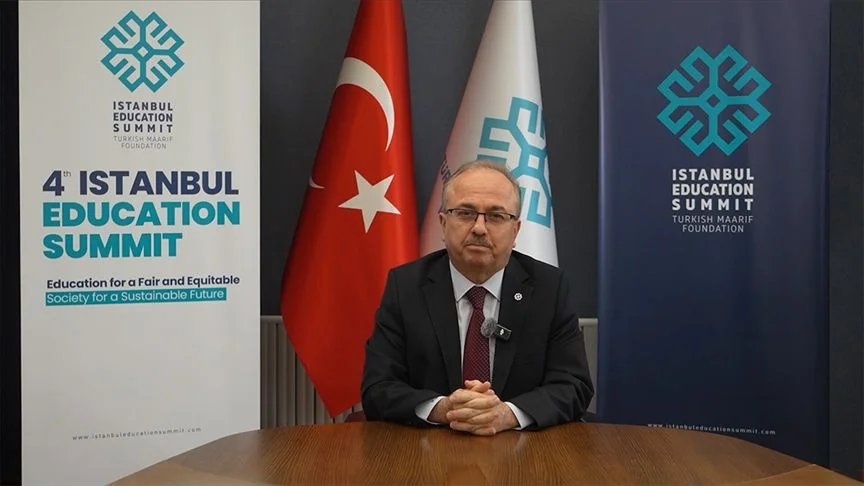
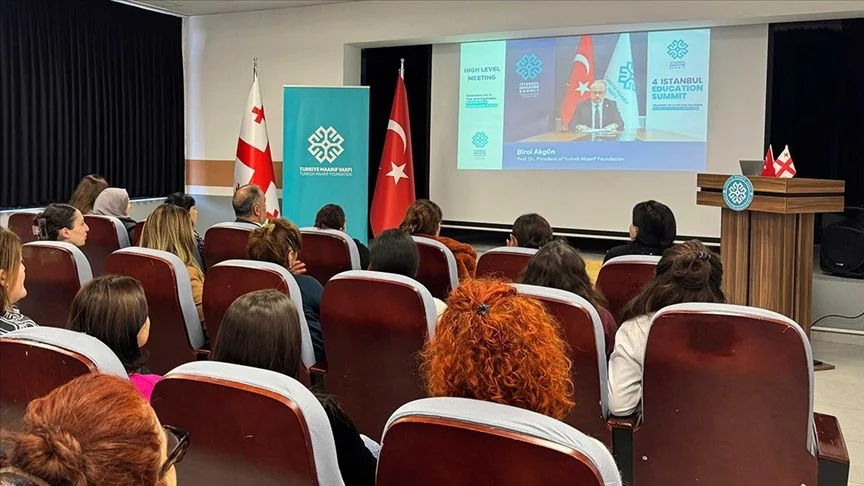
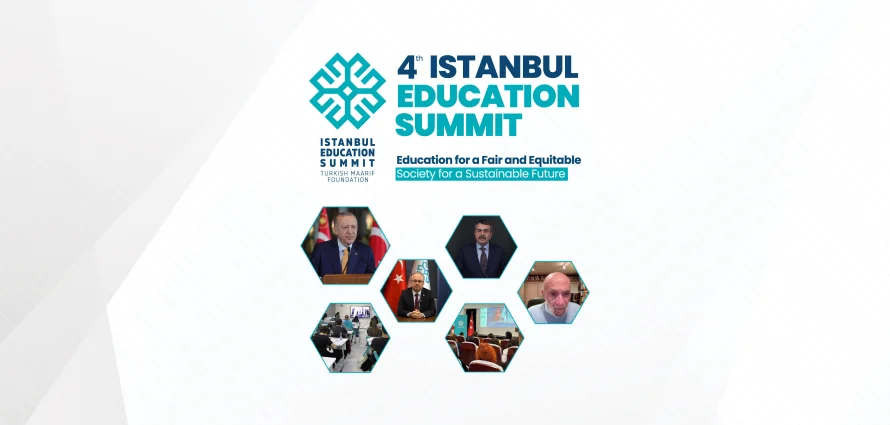
The Istanbul Education Summit, organized by Turkish Maarif Foundation and the meeting point of representatives of institutions and experts in their fields known for their international studies and contributions in the field of education, started online this year on 6-7 December 2024 with the theme of "Education for a Fair and Equitable Society for a Sustainable Future." The summit brings together participants from all over the world to share global experiences.
Within the scope of the program, in addition to the high-level session to be attended by education ministers from different countries, panels will be held on the topics of "Social Justice and Education", "New and Sustainable School Culture", and "Rethinking the Relations between State and Education". During the summit, "Good Practices in Education" organized by Maarif Schools around the world and 5. The International Maarif Photography Contest will also be presented.
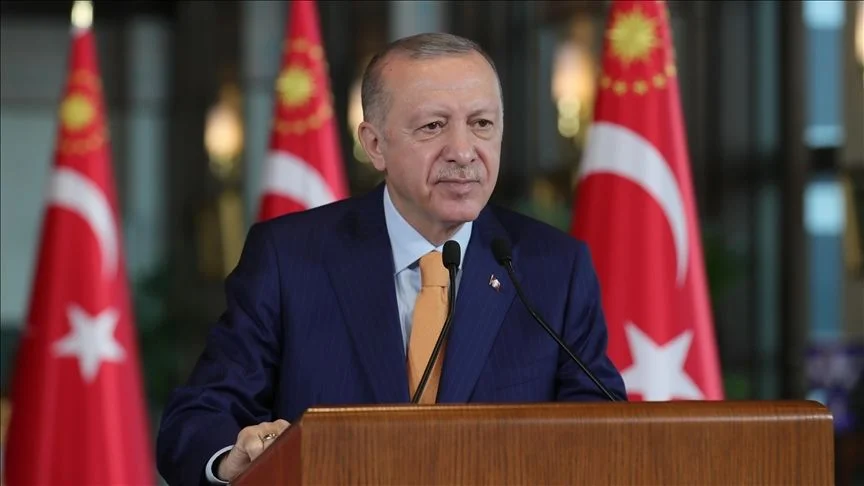
At the 4th Istanbul Education Summit held online, President Erdoğan's message was read.
In his message, Erdoğan wished the summit to be beneficial and continued as follows:
"I believe that successful results will be obtained from this year's summit, where determinations about the inequalities faced by students in many countries of the world will be included, as well as issues such as education and government, education and social justice will be discussed. As of this year, our country, which provides education to 338 thousand 161 international students at its universities, is among the top 10 in the world ranking with this quota, which represents 4.76 percent of the higher education capacity. Our Turkish Maarif Foundation is also making an intense effort to convey our country's rich, prosperous and deep-rooted experience in the field of education to all over the world. Turkish Maarif Foundation, which operates in 55 countries with 446 schools, 1 university, 19 education centers, 11 Turkish Studies Centers and 44 dormitories, provides services to more than 50 thousand students in total."
Emphasizing that the foundation successfully implements international education methods along with the local curriculum in these educational institutions, Erdoğan noted that the foundation serves to raise virtuous and qualified people on the one hand, and contributes to the development of communication between societies on the other.
Stating that they have given the necessary support to the foundation, whose work they follow with appreciation and are proud of their achievements, and that they will continue to do so in the future, Erdoğan said, "I would like to take this opportunity to sincerely congratulate all our foundation members who serve selflessly in 55 different countries of the world, from Kosovo to Colombia, from Jordan to Pakistan, from South Africa to Azerbaijan, from Afghanistan to Somalia. On behalf of my country and nation, I would like to thank each and every one of our teachers, administrators and foundation employees who proudly wave the flag of education in Türkiye, often taking many risks and dangers under difficult conditions."
Wishing the summit to be successful, Erdoğan congratulated the institutions that contributed to this important summit, especially Turkish Maarif Foundation.
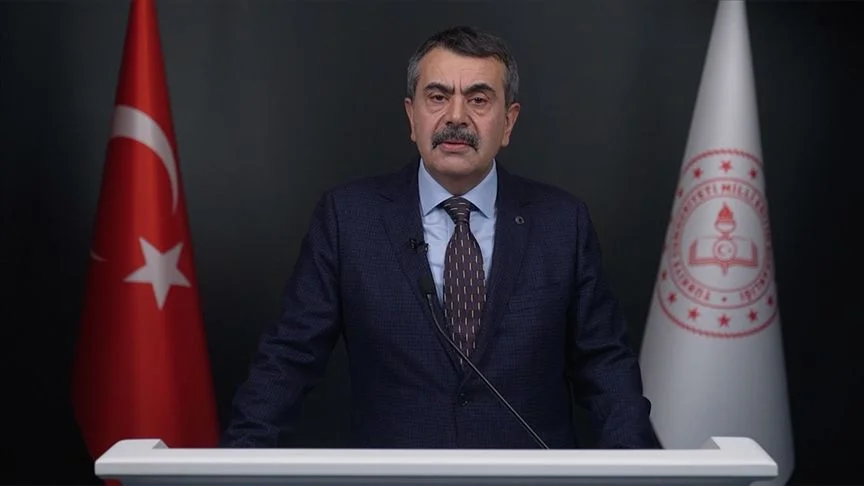
Minister of National Education Yusuf Tekin sent a video message to the Summit.
Emphasizing that the summit has a great meaning in terms of addressing the transformative power of education in achieving social justice and sustainability goals, Tekin noted that the theme of the summit will reveal an important perspective to find solutions to the most fundamental problems facing humanity today.
Tekin stated that he believes that the summit will create a consultation ground that will guide the search for solutions to the common problems of humanity, deepen an understanding of education on the axis of equality and justice, and demonstrate an important will to build a sustainable future, and that he believes that the acquis that will arise from these consultations will guide global education policies and at the same time contribute to further strengthening the nation's vision of education in the international arena Said.
Pointing out that Turkish Maarif Foundation is one of the most important institutions that carry Türkiye's rich experience in the field of education to the international community, Minister Tekin said, "Today, our foundation, which provides services to more than 50 thousand students in 52 countries, implements a model that guides global education policies by focusing on local values. Turkish Maarif Foundation acts with an educational philosophy that respects local cultures and values in the countries where it operates, and carries our country's understanding of education based on peace, justice and equality to the whole world. These efforts not only ensure equality of opportunity in education, but also serve to shape a civilization vision on the axis of justice and wisdom by building bridges between civilizations."
"Education improves individuals' sense of rights and responsibilities"
Underlining that civilizations will rise not only with material achievements, but also with the spiritual values, understanding of justice and ancient wisdom about humanity that surround these achievements, Tekin said that education is the most powerful tool that carries this wisdom to social life, prepares individuals for the future and shapes the destiny of societies, but that the ability of this tool to create a true transformation depends on being built on the principles of justice and equality.
In this context, Tekin stated that the theme of " Education for a Fair and Equitable Society for a Sustainable Future" offers a valuable ground to understand the transformative power of education that rebuilds the social fabric and to establish a fairer order, and said, "While justice refers to a rights-based order that protects human dignity; Equality ensures that every individual gets an equitable share of this order. Education, on the other hand, improves the awareness of rights and responsibilities of individuals, makes it possible to internalize values that prioritize social benefit and to find a place for these values in all areas of life."
"Our Maarif Model deals with education with the vision of civilization"
Minister of National Education Tekin stated the following in his speech:
"Türkiye, with its rich civilization accumulation, aims to lead the construction of a more just and sustainable future by taking education beyond being a development tool. The Turkish Century Maarif Model is one of the most important steps towards the realization of this vision. Our Maarif Model considers education with a vision of a civilization that feeds on the wisdom of the past and directs the needs of the future. Our aim is to educate our children not only as individuals equipped with knowledge; to raise them as individuals who are equipped with the wisdom of the truth, kneaded with a sense of responsibility and with an understanding based on social benefit. In line with this purpose, our priority is to enable our children to discover their own potential and to build an educational culture that will transform this potential into a value production on behalf of humanity. Hopefully, our Maarif Model will continue to be the guide of this understanding that shapes a sustainable future on the axis of justice and equality."
Tekin expressed his belief that the 4th Istanbul Education Summit will guide efforts to build a more equal and fair society through education, and thanked Turkish Maarif Foundation, academics and experts who contributed to the realization of the summit.
Opening speech by Prof. Dr. Birol Akgün
Speaking at the opening of the summit, Turkish Maarif Foundation President Prof. Dr. Birol Akgün stated that the main theme of the summit can be a powerful tool to promote education, justice, equality, compassion and global peace.
Pointing to the genocide in Gaza, Akgün said that they are deeply saddened and condemn the violence and injustice as an institution with a mission to benefit humanity through education.
"We unequivocally condemn violence and injustice, especially against children and the most vulnerable groups. We believe that education has the power to create empathy, understanding, and hope for peace. It is our sincere wish to see peace in every corner of the world."
Stating that the summit provides a platform to address the problems in education, Akgün explained that they organized the summit with the theme of "New Trends and Transformation in Education" in 2021, "The Future of Schools: Post-Pandemic Education Needs" in 2022, and "Managing Change in Education" last year, and that this year they focused on how education can be one of the cornerstones of building fair and sustainable societies.
Stating that artificial intelligence courses are given to students in 7 schools of the Maarif Foundation, which is the pioneer of innovation, and that students are equipped with the skills necessary to be successful in the digitalizing world, Akgün said, "The world is changing rapidly. From technological revolutions to environmental crises and growing inequalities, education must adapt to meet these challenges. But as we innovate, we must ensure that compassion, empathy and collective virtue remain at the heart of our educational efforts."
"We are proud to teach Turkish in our schools"
Talking about the purpose of the Turkish Maarif Foundation, Akgün said:
"With more than 450 schools in more than 50 countries, we aim to raise individuals who represent academic excellence and moral integrity. We aim to raise young people who have 21st century skills and are determined to build a more peaceful, just and wiser world. We are proud to teach Turkish in our schools. We see it not as an attempt to exert influence, but as a bridge for cultural understanding and dialogue. Through Turkish language teaching, we aim to promote mutual respect, friendship and valuing cultural diversity in a globalized world."
Emphasizing that the 4th Istanbul Education Summit will have a worldwide impact, Akgün said, "We aim to develop practical solutions that will create a worldwide impact with dynamic discussions and sessions to be held at this summit. Whether it's addressing the role of the state in education, exploring social justice, or rethinking school cultures, this summit offers an opportunity to create meaningful change."
The summit, to which President Recep Tayyip Erdoğan sent a written message and Minister of National Education Yusuf Tekin sent a video message, continues with sessions after the opening speeches.
The current state and future of education in the world will be discussed
Organized for the 4th time this year by Turkish Maarif Foundation with the theme of "Education for a Fair and Equitable Society for a Sustainable Future", the Istanbul Education Summit brings together the world's leading education experts, practitioners and academics under the leadership of Türkiye.
The summit, which has become an international platform for discussions on future educational perspectives, institutional approaches and education-related practices, will make evaluations based on scientific and academic data on both the current situation and the future of education in the world.
The summit aims to be the meeting point of education ministers from different countries, institutions and individuals known for their international work and contributions in the field of education.
Continues with high-level session
In the high-level session of the summit, moderated by TMF President Prof. Dr. Akgün, Minister of Education and Science of North Macedonia Prof. Dr. Vesna Janevska, Minister of Primary and Secondary Education of Indonesia Abdul Muti and Minister of Education of Liberia Dr. Jarso Maley Jallah delivered speeches.
Minister of Education and Science of North Macedonia Prof. Dr. Janevska noted that they have a country with natural beauties, but they have difficulty in creating commercial activities that can provide high national income, and said, "Therefore, one of the things we need here is to invest in the creativity and innovation of our citizens."
Referring to the changes made in the education system in North Macedonia, Janevska said that they are working to optimize the tools used in this field by improving the educational infrastructure and ensuring that their curricula are of high quality and competitive at international standards.
Janevska stated that they received support from the United Nations (UN), the European Union (EU) and Türkiye for such studies and said, "We would like to thank the Turkish Cooperation and Coordination Agency (TİKA). Because (TİKA) is one of the institutions that has given the most support to the educational institutions of North Macedonia over the years."
Indonesian Minister of Primary and Secondary Education Muti stated that they are working in the field of education in order to be successful within the framework of global standards and said, "We are working to protect our cultural and linguistic heritage in Indonesia and to strengthen global ties."
Stating that education is not only about academic success, but also supports the education of students as a character, Muti said, "One of the main initiatives at this point is to give healthy and nutritious meals to children. As we said, we need to work to ensure that the physical and emotional growth of children is healthy."
Muti noted that they attach importance to the quality of education in their country and that it is up to educators to provide this, and that they are trying to create more qualified personnel with certification programs.
Liberian Minister of Education Jallah underlined that millions of children around the world do not have access to education due to poverty and systemic injustice and said, "As partners here, ensuring universal access to education should be one of our top priorities."
Stating that education curricula should be organized in a way that is inclusive and protects social values, Jallah said, "We are experiencing an unprecedented climate crisis in the past years. In this sense, education can provide young minds with the necessary training and cognitive tools, transforming them into qualified and competent people to solve global problems."
Jallah stated that the idea of a sustainable future is not possible without education and called for investment in education in poor areas where it is needed.
Emphasis on "new values and adaptive vision" at the Summit
On the first day of the summit, Falk, Professor of International Law and Practice at Princeton University, was the keynote speaker.
Pointing out the importance of the theme of the summit in raising future generations against socioeconomic, cultural and ecological threats, Falk emphasized the need for "new values and adaptive visions of living in an ecologically resilient and ethically satisfying way" all over the world.
Describing the current education system as a framework that requires adjustments to be made to ensure that the issue of sustainability is embedded in the values of an egalitarian society, and that every young person should be educated to be more sensitive to the educational experience, Falk stated that the new education priority is to "teach skills and understandings appropriate for the digital age".
"Education shapes minds, transforms societies, and helps discover pathways to a sustainable, just, and peaceful future," Falk said, noting that educators must be committed to making education a tool for justice, equity, and sustainability, and nurturing a sense of integrity.
Emphasizing the importance of ideal education to contribute to the shaping of public policies and to prepare students for active social roles, Falk noted that the new generation should not be in the position of "passive spectators" in the face of developments and challenges that threaten the future.
Falk said that developing technologies create educational adaptations that will meet the needs of the new order based on science and knowledge, and for this reason, ensuring that students reach digital literacy is one of the important points that educators should pay attention to.
Falk said the existence of an equity component in an effective ecological adaptation policy is "vitally important".
Drawing attention to the importance of "othering" in society as well as equality and integrity, Falk stated that "hostile othering can be linked to war, both internationally and in domestic affairs."
Gaza message at the summit
"We are living in a time when Israel is committing genocide against all 2.3 million Palestinians living in the Gaza Strip," Falk said, adding that the genocide continues and has spread beyond Gaza's borders.
Stating that the United Nations (UN) "cannot or does not want to stop this genocide", Falk pointed out that "some western countries, especially the United States, refuse to put pressure on Israel and provide financial or military assistance".
"It is a reminder that the clash of civilizations is part of a historical present, such as Myanmar and Sudan, where the dehumanization of the other leads to genocidal policies, often intertwined with material ambitions for land and resources, culminating in examples of genocide at the most extreme points," Falk said.
The Summit continues with Panels
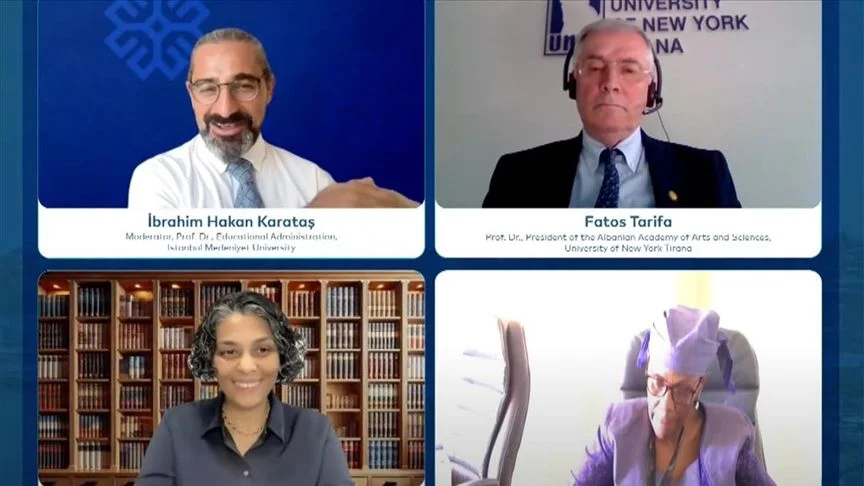
The moderator of the 1st panel at the summit was Prof. Dr. İbrahim Hakan Karataş, Faculty Member of the Faculty of Educational Sciences at Istanbul Medeniyet University.
Dr. Mamphono Khaketla, former Minister of Education and Training of the Kingdom of Lesotho, Amita Chudgar, Professor of Education Policy at Michigan State University, and Fatos Tarifa, President of the Albanian Academy of Sciences and Arts, spoke at the panel.
Dr. Khaketla said that there has been a connection between the state and the church in the field of education for more than 200 years in his country, adding that about 86 percent of the schools belong to the church.
Noting that the state determines the curriculum and provides funding to schools in Lesotho, Khaketla said that one of the latest developments in the field of education in his country is the opening of private schools.
Emphasizing that the state can shape education policies in line with the needs of the private sector, such as engineers or scientists, Khaketla said, "There should be more dialogue between the government and the private sector."
"The role of the state can change at different levels of education"
Chudgar, Professor of Education Policy at Michigan State University, said that they are in a complex age where societies are changing rapidly, and that there are serious debates about the responsibilities of the state in this field because education is a public good.
Stating that one of the roles of the state is to ensure that all its citizens have access to education, Chudgar said, "The role of the state can change at different levels of education such as pre-school, primary and higher education."
Emphasizing that the government also plays a major role in financing education, Chudgar said, "Besides the governments, parents spend a lot of money on their children's education. In an average country, families cover about 25 percent of the money spent on education, and this rate rises to about 45 percent in developing and undeveloped countries."
"Education is mentioned in the constitution of every state"
Tarifa, President of the Albanian Academy of Sciences and Arts, noted that the relationship between the state and education has been discussed for more than 2 thousand years and said, "We agree that education is a fundamental element. For the economic and social well-being of every community, (education) must be maintained in a quality manner," he said.
Stating that it is difficult to answer questions such as the state's control over schools and who should determine the curriculum, Tarifa said, "One thing is certain: Education is an important element, especially not only for individuals, but also for all societies and all civilizations. That's why education is mentioned in the constitution of every state."
Underlining that there are many parties affected by decisions in the field of education, such as students, parents, education experts and the state, Tarifa stated that these decisions cannot be left to teachers or schools alone.
"As far as I know, there is no state that has completely left the responsibilities of education to teachers and schools. The state has always been active in regulating actions related to education," he said.
School Administrator Session
The first day of the summit ended with the School Administrator Session held with the theme of "Leading Schools to Equality: The Role of School Administrators in Shaping Fair and Inclusive Education".
Dr. Zerfishan Adnan from Pakistan, Dr. Nsaghah Samuel Siben from Cameroon, Khaldiya Mustafa from the USA, Naoufel Nechi from Tunisia and Lidra Meidani from Albania participated in the session and shared their experiences in the field of education.
At the summit, which will end tomorrow, panels titled "Rethinking the Relations Between State and Education", "Leading Schools to Equality: The Role of School Administrators in Shaping Fair and Inclusive Education", "Social Justice and Education", "Shaping Tomorrow: How Young People Can Ensure Equality and Sustainability in Education" and "New and Sustainable School Culture" will be held.