


News
-
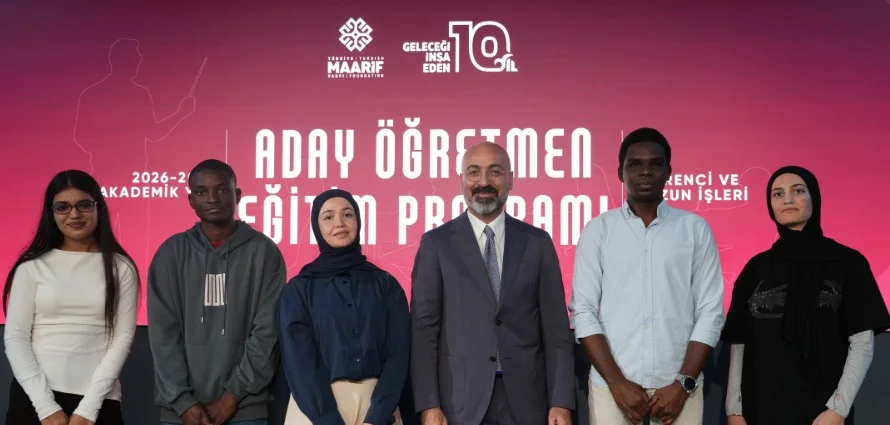 November 13, 2026 New Academic Year of Maarif Prospective Teacher Training Program Begins
The 2026–2027 academic year of the Prospective Teacher Training Program, implemented by Turkish Maarif Foundation to train future educators, has officially begun. A total of 42 international scholarship recipients from 25 countries are participating in the program.As part of the employment-oriented scholarship program that Turkish Maarif Foundation has been implementing since the 2017–2018 academic year, 36 undergraduate and six master’s students from 10 different teaching disciplines will receive training this year. Designed to support the academic and professional development of prospective teachers, the program will follow a 15-week training schedule for undergraduate students and a 20-week schedule for master’s students. Training sessions held at the Foundation’s headquarters will be complemented by book discussions, cultural activities, and academic events.At the opening ceremony, President of Turkish Maarif Foundation Mahmut M. Özdil and Board Member Dr. Halime Kökçe addressed the prospective teachers.“We aim to establish a new educational model based on international solidarity”In his opening remarks, President of Turkish Maarif Foundation Mahmut M. Özdil highlighted the Foundation’s international approach to education, emphasizing that education should go beyond merely transmitting knowledge and should enable students to discover their potential and develop solutions to the challenges of the future.Pointing to significant global challenges concerning access to education and the quality of educational models, Özdil stated that Turkish Maarif Foundation aims to develop an educational approach that takes into account the knowledge, experience, and needs of different countries while being grounded in equality and mutual solidarity.“We want to establish a new educational model based on international solidarity, one in which knowledge traditions that have long been overlooked in the field of education can make their voices heard and participate on an equal footing. As Turkish Maarif Foundation, this is our entire purpose, our ultimate goal, and the focus of all our efforts. Naturally, we cannot achieve this solely through Türkiye’s human resources. We must ensure that people from the countries in which we operate, who share this ideal with us, can contribute to it to the greatest extent possible.”Emphasizing the important role that prospective teachers from different countries play in putting this vision into practice, Özdil stressed that scholarship recipients should not simply transfer the educational experience they gain in Türkiye to their home countries, but should also contribute their own cultures and knowledge traditions to educational processes.“This is precisely why you are here, and this is your responsibility. We do not expect you to simply come to Türkiye, acquire the latest and most advanced ideas, perspectives, or approaches, and then reproduce them exactly as they are in your home countries. We expect you to bring your own countries’ knowledge and experience into the process as well. We want you to develop your own perspectives, formulate responses to your own needs in line with your circumstances and capacities, and become the point where these two sources of strength converge. That is why you are truly so valuable to us.”Özdil encouraged prospective teachers to take an active role throughout the training process, explore the intellectual and cultural heritage of their own civilizations, and bring the knowledge they acquire into the learning environment.“Training Maarif graduates as teachers marks the achievement of an important goal”In her address, Turkish Maarif Foundation Board Member Dr. Halime Kökçe stated that the scholarship program provides students with opportunities not only to advance academically but also to gain professional experience and become more familiar with the Foundation.Kökçe noted that the inclusion of graduates of Maarif Schools in the scholarship program marks a significant milestone. She emphasized the importance of enabling students to maintain the connection they established with Maarif throughout their education by returning to the Foundation as teachers in the future.Reflecting on this process, Kökçe said:“You will graduate from our schools abroad, the Maarif Schools in your home countries, and come to Türkiye to pursue undergraduate and master’s degrees. You may then return to your countries and become part of the teaching staff that will educate new generations of Maarif graduates, thereby completing this cycle. This is, in fact, one of the most meaningful outcomes when we ask ourselves, ‘What is the purpose of Maarif Schools?’”Highlighting the valuable opportunities the program offers prospective teachers as they prepare for their careers, Kökçe advised scholarship recipients to maintain their academic performance, attend training sessions regularly, and expand their social and professional networks by engaging with people from diverse backgrounds.The Prospective Teacher Training Program, which aims to strengthen the human resources of Turkish Maarif Foundation in the field of international education, will continue throughout the academic year with activities supporting the academic, professional, and personal development of scholarship recipients....
-
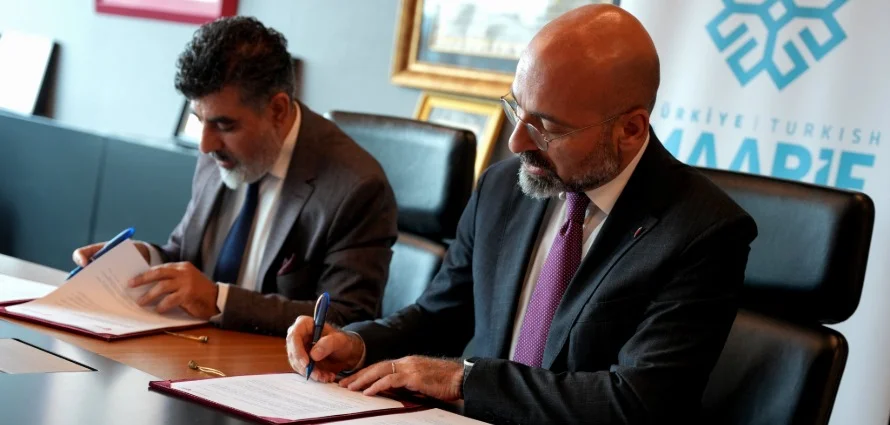 September 04, 2026 Center for Türkiye Studies Established in Skopje through Cooperation between Turkish Maarif Foundation and IBU
A Center for Türkiye Studies has been established in Skopje, the capital of North Macedonia, through cooperation between Turkish Maarif Foundation and International Balkan University (IBU). Operating under IBU, the center will serve as a research platform where academic studies on Türkiye will be conducted through an interdisciplinary approach.The center’s areas of activity have been structured within a broad academic framework addressing Türkiye from multiple perspectives. Research is planned on Türkiye’s domestic and foreign policy, public policies and regional relations, as well as on economy, trade, investment, development and regional integration. Turkish language and culture, cultural diplomacy, education policies, teacher education and comparative education will also be among the center’s priority areas of study. Research on Türkiye is intended to be approached from a multidimensional perspective, drawing on contributions from disciplines such as history, sociology, media and communication, and law.The center will also develop cooperation with the existing academic programs in the fields of Turkish language and education at International Balkan University. The undergraduate programs in Turkish Language Teaching and Turkish Primary Education, together with the master’s programs in Turkish Language and Literature and Turkish Language Education, are planned to be integrated with the center’s research, project and publication activities. The PhD program in Turkish Language and Literature is also expected to contribute to the center’s academic work.In order to provide Türkiye studies with a more systematic academic foundation at the postgraduate level, International Balkan University also plans to launch a Master’s Program in Türkiye Studies in the coming period. The program is intended to operate in close academic interaction with the center’s research activities.Academic publishing will also be one of the center’s main areas of activity. Plans include establishing book series on Türkiye studies under Balkan University Press and, in the medium to long term, launching a peer-reviewed academic journal dedicated to the field.The Türkiye Studies Centers established by Turkish Maarif Foundation in different countries not only support the production of academic knowledge on Türkiye but also provide a platform for developing joint research among scholars. Within this framework, the centers aim to develop research projects and thematic working groups, strengthen international research networks, produce data and reports, and prepare policy briefs on current issues concerning Türkiye and related regions....
-
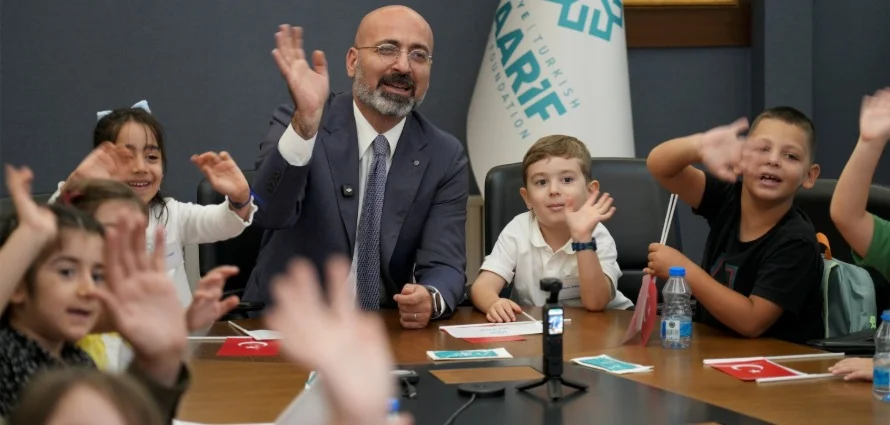 September 01, 2026 “FIRST STEP TO SCHOOL GATHERING” HELD AT TURKISH MAARIF FOUNDATION
The “First Step to School Gathering” was held at the headquarters of Turkish Maarif Foundation in Istanbul to support children who are about to begin their education in adapting to school, turn this important beginning into an unforgettable memory for them, and introduce new generations to the centuries-old Âmin Alayı tradition dating back to the Ottoman era.The programme, attended by children and their families, began with a welcoming and introductory activity. Throughout the day, the young participants enjoyed games and various children’s activities, spending an enjoyable time together while sharing the excitement of taking their first step into school life.The Âmin Alayı Tradition RevivedOne of the most special parts of the programme was the Âmin Alayı, one of the long-established traditions of Turkish-Islamic educational culture. In the past, this tradition transformed a child’s first day of education into a shared occasion of joy for the community. As part of the programme, the children walked to the Office of the President of Turkish Maarif Foundation accompanied by marches, salawat and prayers. President of Turkish Maarif Foundation Mahmut M. Özdil welcomed the children, spoke with them and wished them success throughout their educational journey.President Mahmut M. Özdil also met online with Turkish Maarif Foundation country representatives from the 66 countries in which the Foundation operates. During the meeting, held on the occasion of the start of the new academic year, Özdil extended his congratulations to the country representatives and the education community, expressing his wishes for a successful and productive academic year for students, teachers and families. The children participating in the “First Step to School Gathering” also joined the online meeting and conveyed their good wishes to Turkish Maarif Foundation representatives across different parts of the world.Bringing the first day of the children’s educational journey together with a traditional educational heritage, the programme concluded with an ice cream treat and commemorative photographs....
-
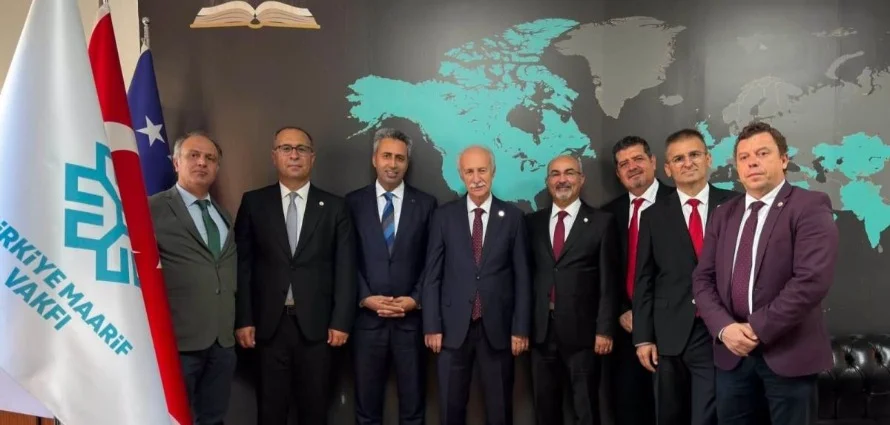 August 25, 2026 Cooperation Opportunities Discussed Between Kosovo Maarif Schools and Trakya University
New opportunities for cooperation regarding Turkish Maarif Foundation’s educational activities in Kosovo were discussed. In this context, a delegation led by Trakya University Rector Prof. Dr. Mustafa Hatipler visited Kosovo Maarif Schools.Turkish Maarif Foundation Kosovo Representative Mehmet Nedim Aslan hosted the university delegation, which was visiting the country as part of the “Bridges of Brotherhood Project” carried out by Trakya University. During the visit, the delegation was briefed on educational activities in Kosovo, while potential academic and educational cooperation between Turkish Maarif Foundation’s educational institutions and Trakya University was also discussed.The meeting focused on in-service training programs aimed at supporting teachers’ professional development, as well as joint initiatives that could contribute to students’ academic development. The parties also exchanged views on collaborative projects based on the sharing of academic knowledge and experience.Turkish Maarif Foundation Kosovo Representative Nedim Aslan highlighted the potential contribution that cooperation with Trakya University could make to educational activities in Kosovo, stating that such initiatives could create new opportunities for both teachers and students.Trakya University Rector Prof. Dr. Mustafa Hatipler, meanwhile, referred to Turkish Maarif Foundation’s educational activities across different regions of the world, particularly in the Balkan countries. Hatipler stated that Trakya University was ready to share its academic expertise and contribute to joint initiatives aimed at supporting teachers’ professional development.The visit concluded with an exchange of gifts and a commemorative photo....
-
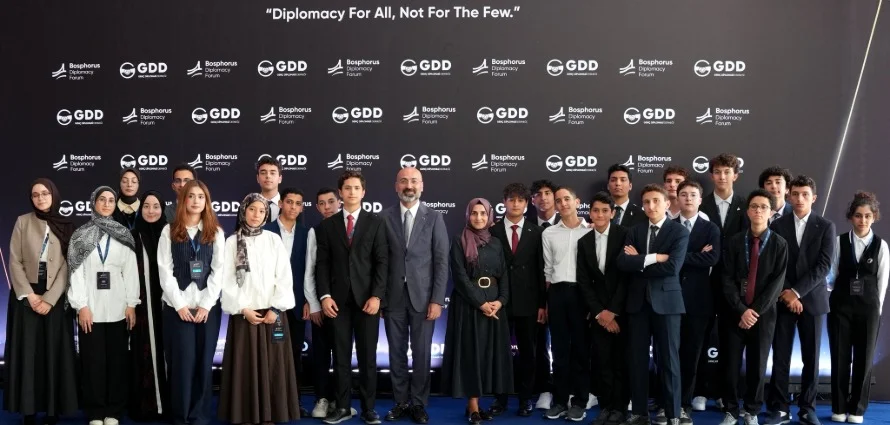 August 16, 2026 President Özdil Meets with Young People at the Bosphorus Diplomacy Forum
President of Turkish Maarif Foundation Mahmut M. Özdil and Member of the Board Dr. Halime Kökçe met with young participants at the Bosphorus Diplomacy Forum 2026, organized by the Young Diplomats Association. Held under the theme “Humanitarian Diplomacy in an Age of Crises,” the forum featured a special session entitled “Syria’s Reintegration and Reconstruction,” organized by the Committee of Foreign Ministers. Attending the session as guest of honor, Özdil highlighted education as one of the fundamental pillars of lasting peace and social reconstruction.Organized by high school students under the umbrella of the Young Diplomats Association, the Bosphorus Diplomacy Forum serves as an international platform enabling young people to take an active role in diplomacy and international relations. The forum, where participants directly experience negotiation, representation, crisis management, and decision-making processes, was held this year under the overarching theme “Humanitarian Diplomacy in an Age of Crises.” A total of six committees took part in the forum: three conducted in English, one in Turkish, one in Arabic, and one in French. Throughout the program, regions affected by modern forms of colonialism were examined from the perspective of humanitarian diplomacy, while participants discussed the impact of crises in areas such as security, migration, energy, the economy, and humanitarian aid on human life, as well as possible solutions to these challenges.As part of BDF’26, in which Turkish Maarif Foundation was among the stakeholders, young participants represented different countries in committees and negotiated their views on global issues. One of the forum’s special sessions, entitled “Syria’s Reintegration and Reconstruction,” was organized by the Committee of Foreign Ministers.Participating in the session as guest of honor, President of Turkish Maarif Foundation Mahmut M. Özdil assessed Syria’s reintegration into the international and regional system as well as the country’s reconstruction process from various perspectives. Özdil emphasized that, particularly in the new period emerging after years of crisis, steps to be taken in education would be significant not only for academic development but also for rebuilding social trust and establishing lasting peace. Stating that Syria’s future should be shaped not by external interventions or new struggles for influence, but by the will of the Syrian people and the country’s own social dynamics, Özdil said that Turkish Maarif Foundation was ready to share its international experience in education throughout this process.President Özdil said: “The responsibility of the international community today is not to turn the new environment emerging in Syria into an arena for struggles for influence, but to respect the will of the Syrian people to build their own future. Reproducing the forms of domination experienced in the past through different actors and instruments will not contribute to the climate of trust and stability the country needs. As Turkish Maarif Foundation, we are ready to contribute to this process with all our experience in education. Our aim is not to shape Syria from the outside, but to learn together with our Syrian brothers and sisters, share our experience, and support children in building a strong future in their own country. While Syrian students learned in Türkiye, Türkiye also learned a great deal from them. Now is the time to put this shared experience to use together for Syria’s future.”The session also provided young participants with an opportunity to examine Syria’s reconstruction process through the themes of education, social trust, and respect for local agency....
-
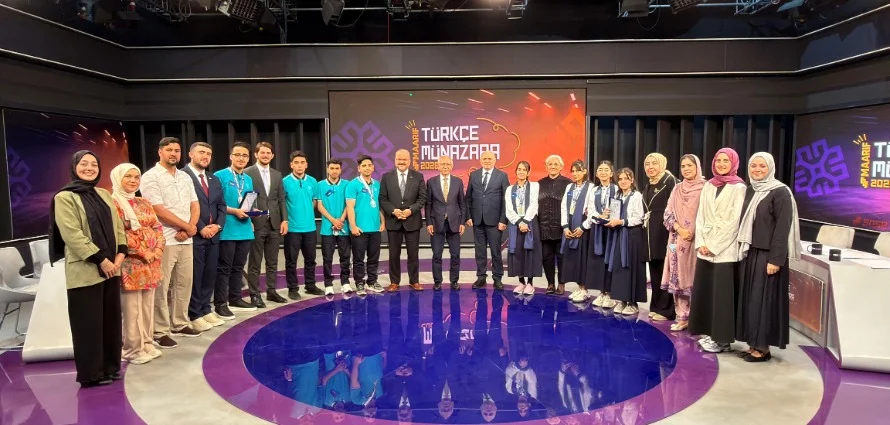 August 11, 2026 Champions of International Maarif Turkish Debate Project Announced
The final event of the International Maarif Turkish Debate Project for the 2025–2026 academic year was held in Istanbul. Organized by Turkish Maarif Foundation, the project aims to improve students’ ability to use Turkish effectively, think critically and express themselves accurately.Approximately 250 students studying at Turkish Maarif Foundation schools and education centres participated in the project, which was held for the third time this year and has become a tradition. Following eight weeks of debate workshops, 48 teams from 24 countries applied to participate in the tournament. At the end of the online preliminary and elimination rounds, followed by the quarter-final and semi-final matches, four teams from four countries qualified for the final event in Istanbul.16 Students from Four Countries Meet in IstanbulIn the category for students who use Turkish as their mother tongue, Sarajevo Team from Bosnia and Herzegovina and Hâr-ı Bülbül Team from Azerbaijan advanced to the final. In the category for students learning Turkish as a foreign language, Belâgat-ı Herat Team from Afghanistan and Quetta Girls’ High School Team from Pakistan qualified for the final.As part of the final event, which brought together 16 students from four countries and their supervising teachers, interview recordings were conducted on 20 July 2026. The final matches were recorded at TRT Studios on 21 July.Following the highly exciting matches, Hâr-ı Bülbül Team from Azerbaijan became the champion in the category for students who use Turkish as their mother tongue. Quetta Girls’ High School Team from Pakistan won first place in the category for students learning Turkish as a foreign language.The award ceremony was held on 22 July 2026 at the headquarters of Turkish Maarif Foundation in Üsküdar. The event was attended by Turkish Maarif Foundation President Mahmut M. Özdil, Vice President Prof. Dr Ahmet Emre Bilgili, project coordinators, teachers and finalist students.Speaking at the ceremony, Turkish Maarif Foundation President Mahmut M. Özdil stated that all the students who had reached the final after a long preparation process had achieved significant success. Emphasising that debate offers students a wide range of benefits beyond learning Turkish, Özdil said that the students had developed their ability to assess different ideas, approach issues from various perspectives, structure their thoughts and express them accurately.Özdil said:“Regardless of the language, it is important that you have learned to think, question your own thoughts and develop different perspectives by asking, ‘We can look at this issue from this side, but what would we encounter if we looked at it from the other side?’ I believe that this competition has contributed not only to your Turkish language skills but also to your ability to organise and accurately express your thoughts.”Özdil encouraged the students not to see themselves as foreigners in Istanbul, but as representatives of a shared civilizational heritage. He also highlighted the importance of students from different countries coming together within the same linguistic and cultural environment.Turkish Maarif Foundation Vice President and Chair of the Debate Jury Prof. Dr Ahmet Emre Bilgili also congratulated the finalist students and noted that the matches had been highly competitive. Stating that the competition was the outcome of a long and intensive preparation process, Bilgili said that the students had reached the final by conducting research and reflecting deeply on the debate topics.Pointing out that the difference in scores between the first- and second-place teams was very small in both categories, Bilgili said:“Reaching the final is a major achievement in itself. In both categories, the difference between first and second place was extremely small. This result demonstrates how closely matched the teams were. Therefore, all the finalists successfully completed the competition.”Bilgili advised the students to make the most of their programme in Istanbul, emphasising that city tours provide an important learning opportunity. He encouraged the students to examine carefully the monuments and historical works they encountered during their visits to the Bosphorus, Sultanahmet and the Historic Peninsula, listen attentively to the information provided and take notes. He also recommended that they keep a digital or written travel journal about their visit to Istanbul.Language Skills Integrated with Critical ThinkingInternational Maarif Turkish Debate Project aims not only to enable students to use Turkish effectively and accurately, but also to strengthen their skills in conducting research, developing theses and antitheses, substantiating their ideas and speaking before an audience.Combining prepared and impromptu speaking activities, the project helps students build self-confidence, work collaboratively and approach differing opinions with respect. It also provides a multidimensional learning environment that integrates students’ linguistic competence with critical thinking, moral awareness and persuasive communication skills....
-
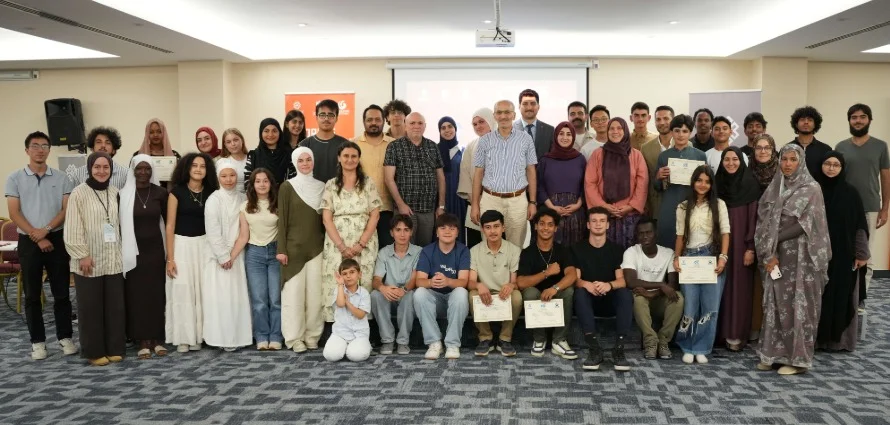 August 10, 2026 31 Students from 19 Countries Come Together at Turkish Summer School
Organized by Turkish Maarif Foundation to enhance students’ Turkish language skills and enable them to gain first-hand knowledge of Türkiye’s rich cultural heritage, Turkish Summer School brought together 31 students from 19 countries in Yalova. The two-week program concluded with a closing ceremony where students presented the academic, cultural, and artistic work they had completed throughout the program.Organized in line with the strategic objective of “Enhancing Quality in Education” and the goal of “Contributing to Turkish Becoming an International Language,” as set out in Turkish Maarif Foundation’s 2024–2026 Strategic Plan, Turkish Summer School was held from July 27 to August 7, 2026, through the cooperation of Turkish Maarif Foundation, Yunus Emre Institute, and Ibn Haldun University at Language Village in Yalova, affiliated with Ibn Haldun University. A total of 31 high school students from 19 countries, all studying at Turkish Maarif Foundation schools and distinguished by their academic achievements, participated in the program.Over the course of two weeks, students had the opportunity to actively use the Turkish knowledge and skills they developed in class in daily life, social interactions, and a variety of activities. The program was structured around three main components: Turkish language development activities; social, cultural, scientific, and artistic workshops; and trips introducing students to Türkiye and its cities. Throughout the program, students took part in a wide range of activities, from oral communication exercises, reading, and writing activities to project-based practices, cultural visits, and various social events. These activities aimed to enhance students’ Turkish language proficiency while strengthening their intercultural communication, empathy, collaboration, and social interaction skills.At the closing ceremony of the summer school, students shared the outcomes of the academic, cultural, and artistic work they had carried out during the two-week program. Turkish Maarif Foundation Board Members Ahmet Türkben and Mustafa Çaltılı also attended the closing ceremony and viewed the students’ work.Turkish Maarif Foundation Plays a Key Role in Teaching Turkish WorldwideTurkish Maarif Foundation plays an important role in promoting Turkish as an international language of communication and culture through its work in teaching Turkish to non-native speakers. Making Turkish language education an important part of its educational activities at Maarif schools across different regions of the world, Turkish Maarif Foundation develops Turkish teaching materials for different age groups and proficiency levels, conducts initiatives supporting teachers’ professional development, and organizes programs such as Turkish Summer School, where students can learn the language through immersion and real-life experience.Through the Turkology symposia it organizes, Turkish Maarif Foundation brings together academics and experts to examine the current status of Turkish around the world, approaches to teaching the language, and the challenges encountered in this field. As part of this comprehensive approach, Turkish Summer School strengthens Maarif students’ interest in Turkish and their motivation to learn the language, brings together young people from different cultures through Turkish, and contributes to making Turkish a more visible, effective, and influential language of communication internationally....